The Origins of the Belt Ranking System
by Master Daniel R. Segarra
*Note this article is excerpted from an ebook you can download the ebook from here for free: http://www.warrior-scholar.com/pdfs/SOTWS_Belts.pdf
Originally when GM Hwang Kee demoed Hwa Soo Do he was photographed wearing a simple white belt. I'm not sure if that was consistent through his development of Hwa Soo Do, but after he met and consulted with other more successful martial artists such as Lee Won Kuk he definitely adopted the gup and Dan rank system.
The red Stripe started in 1960 and symbolized Neh Gang Weh Yu or Strong inside gentle outside Um/Yang philosophy. GM was a dedicated student of the I Ching and philosophy. If you notice on the Korean flag (태극기/太極旗 Tae geuk gi) you have the Red/Blue Um Yang and the Trigrams all of which are two upper bars with a center bar (Heaven, Earth, Water, Fire) The Um Yang bars have a different bar in the center the Water ☵ a solid line and the Fire ☲ a broken line) The Red stripe was inspired by this Um/Yang philosophy. Remember GM was born during the Japanese occupation the South Korean flag was banned during Hwang Kee's youth;
"The flag was first adopted as a symbol by the kingdom of Korea in 1882. During the Japanese rule of Korea (1910–1945), the flag was banned. The taegeukgi was used as a symbol of resistance and independence during the Japanese occupation and ownership of it was punishable by execution"
The flag was a deep source of pride for him and encompassed the martial art philosophy (ship sam seh) in its design.
☰ geon (건/乾) sky (천/天) spring (춘/春) east (동/東) humanity (인/仁) father (부/父) metal (금/金) justice (정의/正義)
☲ ri (리/離) sun (일/日) summer (하/夏) south (남/南) courtesy (예/禮) son (중남/子) fire (화/火) wisdom (지혜 / 智慧)
☵ gam (감/坎) moon (월/月) winter (동/冬) north (북/北) intelligence (지/智) daughter (중녀/女) water (수/水) vitality (활/活)
☷ gon (곤/坤) earth (지/地) autumn (추/秋) west (서/西) righteousness (의/義) mother (모/母) earth (토/土) fertility (풍요/豊饒)
If you were to draw the trigram for water in it's Um/Yang colors it would look like this:
Look familiar? Also note that there are FOUR seasons, and guess what colors they represent? Yep White, Green, Red and Blue/Black the original belt ranking system. (orange as you noted was added later in 1975)
Also note the color represents 'vitality'. When translating the Moo Do Chul Hak one of my meetings with then Master H.C Hwang we discussed Hwal '活' which he translated as vitality. He stressed the importance of the concept when translating the Moo Do creed written by his father;
Moo Do Creed (Moo Duk Kwan Hun Jang)
The purpose of Moo Do is Hwal 活 to cultivate ourselves
Moo Do does not end in offense or defense
It is one step further, the purpose is life itself
Even facing the enemy, our goal is to save them
The principles of Moo Do are the principles of Nature
Guided by Moo Do we may achieve the goal of Hwal 活 in the principles of Nature
To do so we must concentrate, stress the beauty, line and speed, and study scientifically
To provide all this is our creed.
- Hwang Kee
Interestingly in the current translation of the Chor Hak, they don't translate Hwal. They just say Hwal as in "The purpose of Moo Do is Hwal to cultivate ourselves" Which I found odd since GM H.C Hwang stressed how important it was/is. My interpretation of 活 was living life to our fullest. i.e exploring our full potential. Hwal is made up of two characters water and tongue 水 + 舌 meaning if you had a wet tongue you were alive.
Remember the MDK was constantly being developed and tweaked by GM Hwang Kee. Remember 1945 Korea was liberated but a decimated mess than only five years later was at war with itself until 1953. Then tons of political corruption under Reeh until in 1960 he was thrown out after the uprising. So imagine having the largest martial art organization in Korea when all of this is going on. Keep in mind GM Hwang Kee was falsely charged with being a traitor hunted, eventually captured and tortured (waterboarded) . So he had his hands full during the development of the MDK.
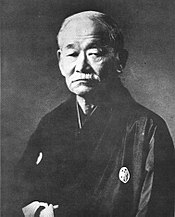
The Gup, Dan ranking system was developed by Kanō Jigorō (嘉納 治五郎?, 28 October 1860 – 4 May 1938) the creator of Judo prior to that there were no ranking systems other than in the military which sometimes established rank or function by the color of the uniforms since the belts were part of that occasionally the matched the color of the uniform. Evidence of this is the Inigo trimmed uniform and belt GM came across in a Museum which he based the MDK uniform after.
Kano based his Dan and Gup (Kyu in Japanese) from the Game of Go. Go (碁), known in Chinese as weiqi (棋) and in Korean as baduk (hangul: 바둑), is an ancient board game for two players that is noted for being rich in strategy despite its simple rules.
In Go, rank indicates a player's skill in the game. Traditionally, ranks are measured using Gup/kyu and dan grades, a system which also has been adopted by many martial arts not just Tang Soo Do.
Go Ranks
Rank Type Range Stage
Double-digit kyu 30–20k Beginner
Double-digit kyu 19–10k Casual Player
Single-digit kyu 9–1k Intermediate/Club Player
Amateur dan 1–7d (where 8d is special title) Expert Player
Professional dan 1–9p (where 10p is special title) Professionals
Note the Dan Ranks range from 1-9 with 10th being a special title similar to most martial arts ranking systems. Kano original use of the Kyu/Dan was eventually used by Funokoshi (Shotokan's founder) and made it's way to Korea via the Koreans that trained in Shotokan and Judo (Yudo in Korean). The Gup system was simply a reversal of the Dan ranking starting at 10th Gup you progressed by eliminating numbers and as you reach Dan you climbed up the numbers. There are all kinds of philosophical concepts that fit with this like empty your cup from full to empty (gup ranks) then filling it (dan ranks) etc.
Originally many Dan members wore Black belts simply because there was an assimilation of different Kwans into the Moo Duk Kwan and they brought that with them which eventually was standardized into the Midnight Blue. Even most 'Black' belts were Indigo Blue that was due to the fact that Indigo was the primary dye until Black dye began being imported from Europe.
A fact most people don't know is you were not considered a 'Master' until 5th Dan originally in Korea.
Here is a link discussing an old MDK manual I posted which details rank at that time:
http://www.warrior-scholar.com/smf/index.php?topic=652.15
Here is a link to the actual manual:
http://www.warrior-scholar.com/blog/?page_id=1047
Now that this has been shared for the first time I imagine in a few years this will be the way people describe the belt ranking system of the MDK. Just remember who told you and you heard it here first.


 The Origins of the Belt Ranking System

 OFFLINE